
How to hire a home care virtual assistant
How to hire a home care virtual assistant: dos, don’ts, and how to tell a good hire from a bad one.
Home care owners usually hire a virtual assistant because they’re still doing the office work themselves: call-outs still land on their phone, intake files sit unfinished, and caregiver notes wait. The hire is supposed to take that work off their plate.
The steps below cover the hiring itself rather than how to set the person up afterward. Owners who skip them tend to hire someone who sounds busy but still leaves the same work with the owner.
Always give candidates a mini test.
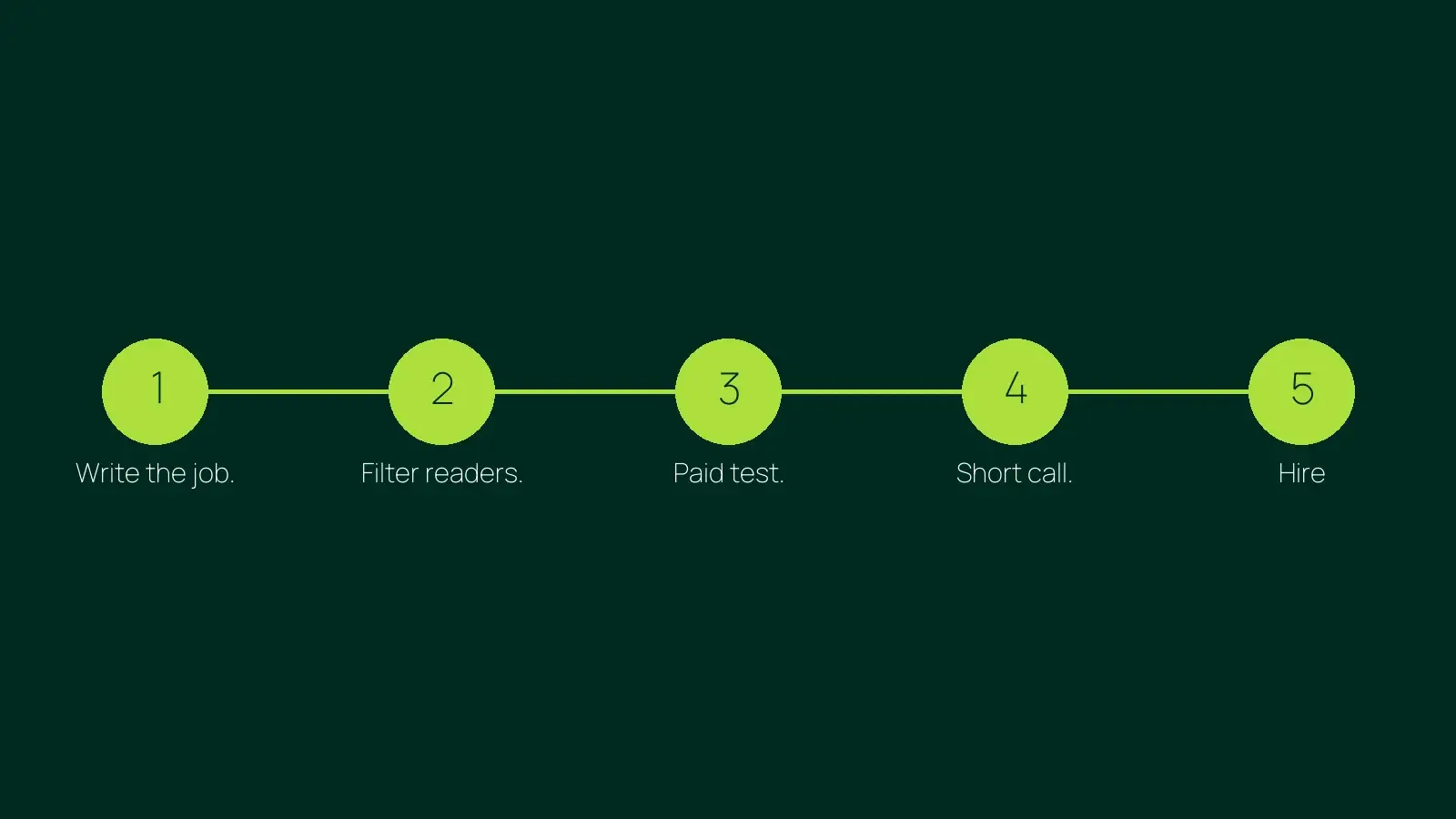
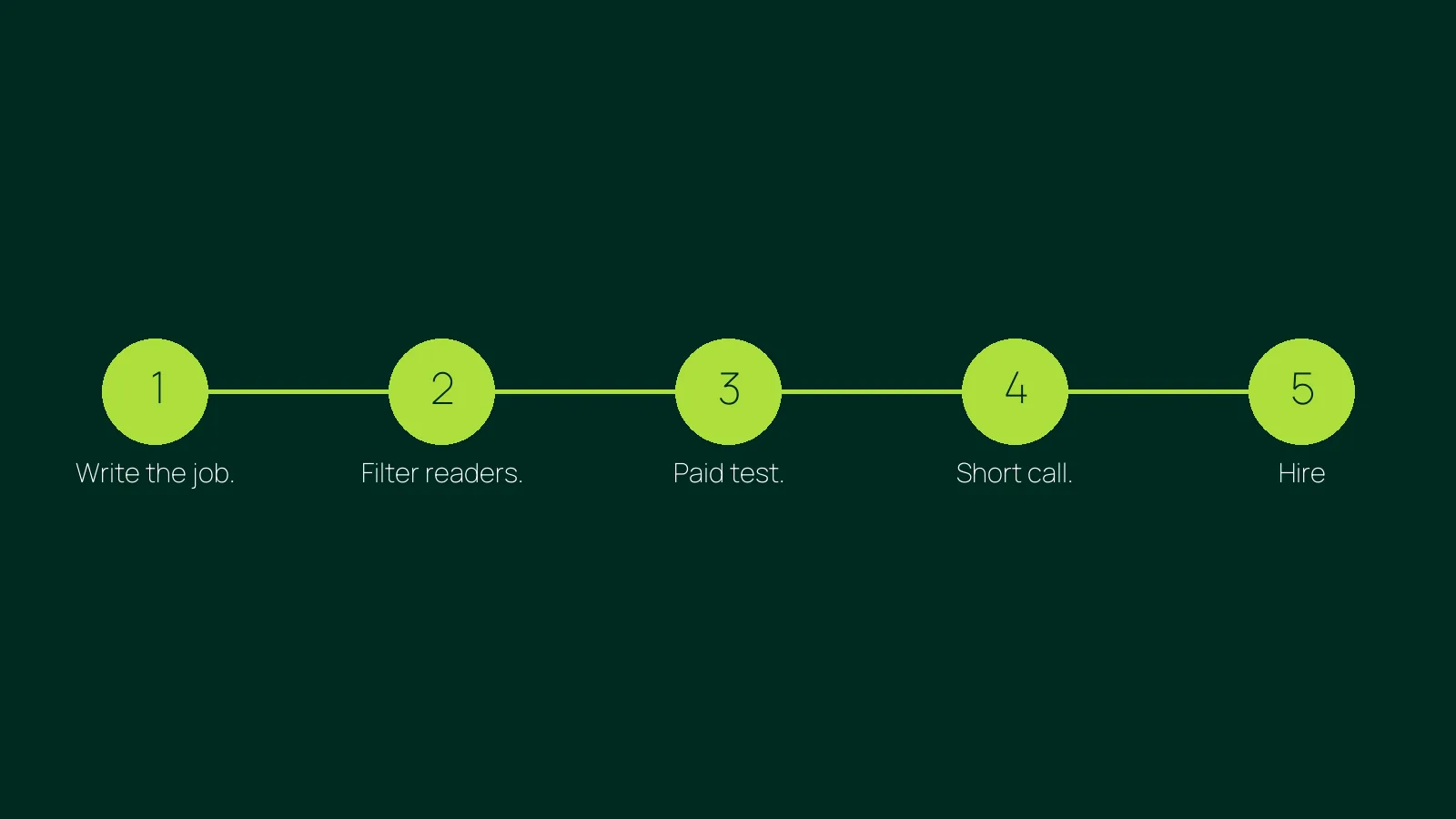
Write one job, in plain words
Name the work, the hours and the tools in the posting, for example: “Cover weekday call-outs in our scheduling software, and close them the same day.”
Upwork’s hiring guide makes the same point in different words: write down the actual work, the software they’ll use, and when they need to be online. If you can’t write that, you won’t be able to score a test later, and you’ll end up hiring whoever talks best.
Hide a question only a reader can answer
Put one line in the posting that only someone who actually read it can respond to, such as asking them to start their note with a word you chose or to answer a question about the job. Skip anyone who sends a pasted pitch and ignores that line. It’s a cheap filter, and it cuts the pile down before you spend an hour on a call.
Pay them to do a slice of the real job
Don’t hire on a résumé. Instead, pay for a short piece of the work you actually need done, such as:
- a fake call-out to close
- three intake notes to file the way you file them
- a day of the calendar to clean up
Score the result yourself. If you can’t tell good work from bad on that sample, you aren’t ready to hire for that job yet.
Pay for the test, because free samples attract people who need a job more than they can do this one. Skip anyone who fakes the sample, copies it, or won’t show the work.
Make sure their hours overlap the work
If call-outs come in at 7 a.m. your time, the person has to be working at 7 a.m. Someone who works overnight and catches up with you once a week adds a delay instead of taking work off you, so ask about hours before you talk price.
Hold a short call and judge their writing
A short call tells you whether they can talk through a messy day, while their emails and the test tell you whether they can write. Upwork is blunt about this: judge the writing in the application. Anyone who dodges a call, lies about where they work, or pads their hours is a no.
A good hire vs a bad hire
| Good hire | Bad hire |
|---|---|
| Answers the hidden question in the posting | Sends a pasted pitch |
| Does the paid test on the real job | Talks about “all admin” |
| Hours overlap the work | Only works while you sleep |
| Writes clearly in the test and the emails | Looks cheap, then needs watching |
| Shows past work you can check | Fakes the sample or skips the call |
Hire on the test, not the rate
If the test is clean and the hours fit, hire that person for that job. If the test is messy, stop there, because a low rate doesn’t make a good hire. US office admin work still sits near the BLS range for secretaries and administrative assistants, and a cheap hire usually means you’ll still end up doing the job yourself.
If you’d rather have a company take on the work than a one-off freelancer, that’s a different path, and we explain it in why we don’t sell hours.
Sources: Hire virtual assistants on Upwork. US wage context from the Bureau of Labor Statistics.